
Table of Contents
- Why High Pressure Cleaning Damages Gutters
- Safe PSI Settings and Nozzle Tips by Gutter Material
- How to Clean Gutters Without a Pressure Washer
- Soft Wash Gutter Cleaning Benefits Explained
- Post-Cleaning Inspection Checklist
- Gutter Maintenance Frequency That Prevents Build-Up
- When to Call a Professional Gutter Cleaning Service
- Conclusion: Protect Your Gutters and Your Home
- Frequently Asked Questions
Last Updated: September 9, 2026
A pressure washer can clear a blocked gutter in minutes, but it can also punch holes through the metal, warp the fascia, and blast water behind the downpipe where it causes rot. The key to preventing gutter damage from high pressure cleaning is understanding that gutters are not designed to absorb direct lance pressure. This guide explains exactly how to protect your gutters, what pressure is safe, and when to put the machine away.
Most guides treat gutter cleaning as a simple chore. In practice, it is a material science problem. A concrete tile roof sheds water differently than a Colorbond steel roof, and the gutters attached to each respond very differently to force. The most common form of gutter damage we encounter is not a dramatic collapse; it is a subtle distortion of the gutter seam or a hairline crack that leaks for months before anyone notices.
Why High Pressure Cleaning Damages Gutters
The physical force of water at close range is the primary cause of gutter damage. When a pressure washer lance is held within a few centimetres of the gutter floor, the jet acts like a cutting tool rather than a cleaning stream. This concentrated energy can strip protective coatings, dent thin aluminium, and force water up behind the gutter where it meets the fascia boards.
Gutter seams are especially vulnerable. Most residential gutters are joined with sealant and rivets, not welded. A high-pressure jet directed at a seam will exploit the weakest point, loosening the sealant and allowing water to penetrate the joint. Over time, this leads to internal corrosion that is invisible until the ceiling stains.
The structural integrity of the entire run depends on the hangers and brackets that secure it to the roofline. A forceful blast can knock a gutter out of alignment, creating a low spot where water pools and eventually rusts through. What looks like a quick clean often becomes a repair bill.
Common Signs of Gutter Damage
Knowing what to look for after cleaning prevents small issues from becoming major leaks. Check for these indicators along the entire gutter run:
- Visible dents or dimples on the gutter floor, often where the lance was held too close
- Separated or cracked seams where water has forced the sealant apart
- Water staining on fascia boards beneath the gutter, indicating overflow or backflow
- Sagging sections between hangers, which suggests the brackets have pulled loose
- Rust streaks running down the exterior face, a sign the protective coating has been breached
If you notice any of these after a clean, address them immediately. A small seam leak is a simple repair; a corroded gutter section requires replacement.
Safe PSI Settings and Nozzle Tips by Gutter Material
Gutter damage is almost always a function of pressure and distance. The safe operating range for cleaning gutters in place is between 500 and 800 PSI, held at least 300 millimetres from the surface (the CDC). This is far below the 1500 to 2000 PSI that many domestic machines produce at the nozzle.
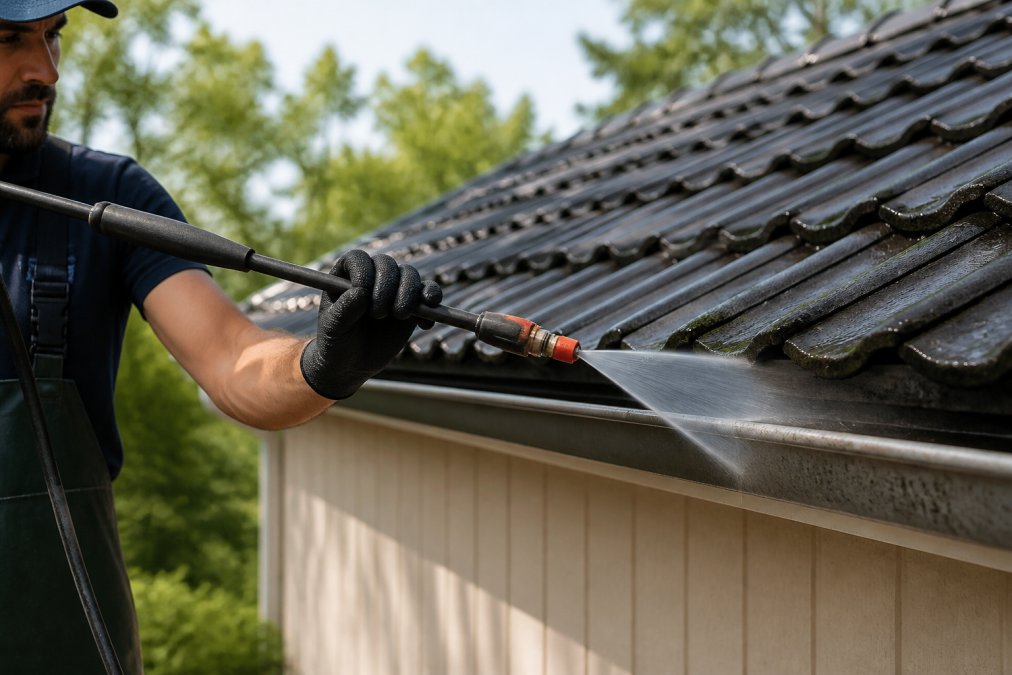
The material of your gutter dictates the upper limit of that range. Use a 40-degree nozzle tip, which produces a wide fan spray rather than a concentrated jet. Never use a 0-degree or 15-degree tip for gutter work; these are designed for stripping paint and concrete, not cleaning metal.
| Gutter Material | Safe PSI Range | Recommended Nozzle | Key Risk |
|---|---|---|---|
| Colorbond steel | 500-700 PSI | 40-degree fan | Scratches in paint layer lead to rust |
| Aluminium | 400-600 PSI | 40-degree fan | Dents easily; thin gauge distorts |
| Galvanised steel | 600-800 PSI | 40-degree fan | Corrosion where zinc layer is breached |
| PVC / Vinyl | 300-500 PSI | 40-degree fan | Cracks and shatters under force |
The distance matters as much as the number on the gauge. Hold the lance back and let the fan spray do the work. If the water is visibly lifting paint or creating a mist of metal particles, you are too close.
How to Clean Gutters Without a Pressure Washer
The safest way to prevent gutter damage is to remove the pressure washer from the equation entirely. Manual removal is gentler on the gutter material and allows you to inspect the condition of the structure as you work, catching weak spots before they become failures.
Start at the downpipe outlet and work toward the opposite end. This ensures dislodged debris flows toward the exit rather than building up behind you. Use a ladder stabiliser and work from the downpipe end, scooping debris into a bucket rather than letting it fall onto garden beds below.
Manual Tools That Get the Job Done Safely
A few inexpensive tools make manual cleaning faster and reduce the temptation to reach for the pressure washer:
- Gutter scoop or trowel: A plastic scoop is preferable to metal, which can scratch the gutter floor
- Gloved hands: For removing compacted, wet leaf matter that a scoop crumbles
- Garden hose with a spray nozzle: For flushing remaining silt at normal mains pressure, which is under 500 PSI and safe for all gutter types
- Gutter vacuum attachment: For reaching second-storey runs without climbing
Flush the gutters with the hose after scooping. This reveals any remaining clogs near the downpipe and confirms the water flows freely. A steady flow at mains pressure is sufficient for debris removal without risking surface abrasion.
Soft Wash Gutter Cleaning Benefits Explained
Soft washing is the method professional services use to clean gutters without mechanical force. It combines low-pressure water with cleaning solutions to break down organic matter like moss, lichen, and algae at the chemical level, rather than blasting it off physically.
The primary benefit of soft washing for gutter maintenance is the elimination of surface abrasion. Because the pressure is comparable to a garden hose, there is zero risk of denting, seam separation, or coating damage. The cleaning action comes from the solution, not the water pressure.
Chemical dilution is critical in this process. A sodium hypochlorite solution that is too strong can corrode metal gutters and damage surrounding landscaping (the EPA). Professional applicators test the dilution and rinse thoroughly to neutralise the solution. For homeowners, commercial soft wash solutions are available pre-diluted, but testing on an inconspicuous area first is always advisable.
Post-Cleaning Inspection Checklist
Cleaning is only half the job. A proper inspection after cleaning catches the damage that the debris was hiding. Work through this checklist systematically to confirm the gutter system is sound:
- Check downpipe flow: Pour a bucket of water into the gutter and confirm it drains quickly with no backup
- Inspect seams and joins: Look for gaps, cracked sealant, or water weeping during the flow test
- Examine hanger brackets: Ensure each bracket is secure and the gutter has no sag between supports
- Look for rust or corrosion: Note any bare metal spots where the coating was scratched during cleaning
- Verify the slope: Water should pool nowhere; standing water indicates a low spot that needs re-hanging
Troubleshooting Damaged Seams and Downspouts
If your inspection reveals a leaking seam, act before the next rain. Clean the area around the joint, allow it to dry completely, and apply a gutter sealant designed for your gutter material. For downspouts that are blocked below the visible outlet, use a plumber’s snake or a high-pressure hose attachment designed for downspout clearing, which works from the bottom up rather than forcing debris further into the pipe.
Gutter Maintenance Frequency That Prevents Build-Up
Gutter damage from high pressure cleaning often happens because gutters are left too long and the debris has compacted into a hard mass. Preventative maintenance is the most effective way to avoid both clogged gutters and the aggressive cleaning methods they invite.
A practical gutter maintenance frequency is twice per year: once in late autumn after the leaves have fallen, and once in late spring before the heavy rain season (energy.gov). Homes surrounded by large trees may need a third clean in mid-summer. The goal is to remove debris while it is still loose, preventing the build-up that leads to moss growth and blocked downpipes.
Gutter guards and gutter caps reduce the frequency of cleaning by keeping large debris out of the channel. They do not eliminate the need for maintenance entirely, as fine silt and seed matter still accumulate, but they extend the interval between cleans and reduce the risk of overflow-related water damage.
When to Call a Professional Gutter Cleaning Service
There comes a point where DIY cleaning is no longer the sensible option. Working at height on a ladder carries significant risk, and the temptation to use unsafe pressure settings increases when you are trying to finish quickly. If your gutters are on a second storey, if you have mobility concerns, or if you are preparing a property for sale and need guaranteed results, a professional service is the safer choice.
Professional cleaners use methods that prioritise structural integrity. Professional cleaners use methods that prioritise structural integrity. Advanced water-fed pole systems allow gutters to be cleaned from the ground, eliminating ladder risk entirely. Eco-friendly cleaning methods break down organic buildup without high pressure, protecting the gutter material, the roof edge, and the surrounding landscaping.
Never use a pressure washer to clear a completely blocked downpipe. The water has nowhere to go and will force itself back up under the gutter, lifting the seam and pouring water behind the fascia. Clear the blockage mechanically first.
Conclusion: Protect Your Gutters and Your Home
The tension in gutter maintenance is clear: gutters need regular cleaning to protect your home from water damage, yet aggressive cleaning methods can cause the very damage you are trying to prevent. The solution is not to avoid cleaning, but to clean with methods that respect the material. Manual removal, soft washing, and low-pressure flushing are always safer than a high-pressure lance.
Frequently Asked Questions
Is it safe to pressure wash gutters?
Using a standard pressure washer directly on gutters is rarely safe. Most residential gutter materials, especially Colorbond steel and PVC, can dent, warp, or split at pressures above 1500 PSI. The concentrated jet can also force water behind the gutter, damage seams, and strip protective coatings. If you must use a pressure washer, fit a 40-degree nozzle, keep the pressure under 1200 PSI, and never spray upward into the gutter. A soft wash or manual cleaning method is safer for preventing gutter damage from high pressure cleaning.
What are the common signs of gutter damage caused by high-pressure water?
Look for dents or dimples on the gutter face, which indicate the metal has been struck by a concentrated jet. Separated or lifted seams between gutter sections are another clear sign, as high pressure forces the joints apart. Check for paint stripping or bare metal spots, which can lead to rust. Water leaking behind the gutter or staining the fascia boards suggests water has been forced up under the gutter edge. Finally, inspect the downspouts for cracks near the top, a common failure point from direct blasting.
Can high-pressure cleaning void my gutter warranty?
Yes, it can. Gutter manufacturers often specify cleaning methods in their warranty terms. Using a pressure washer at close range or with a narrow nozzle can be classified as misuse, which voids coverage for corrosion, paint peeling, and structural damage. Warranties typically require gentle cleaning with a soft brush, mild detergent, and low-pressure rinsing. If you are unsure, check your product warranty before cleaning. Hiring a professional who uses soft wash or water-fed pole systems helps protect your warranty status.
What is the best way to clean gutters without damaging the fascia or seals?
The safest method is hand removal followed by a low-pressure rinse. Use a gutter scoop or trowel to lift out leaves and debris, working toward the downspout. Flush the gutters with a garden hose fitted with a spray nozzle, directing water toward the downspout to confirm flow. For stubborn grime, use a soft-bristle brush with warm soapy water. This approach protects the seals and fascia because no concentrated water pressure is applied to joints or mounting points. A wet/dry vacuum with a gutter attachment is another effective no-pressure option.
If your gutters are beyond a simple DIY clean, or if you are not comfortable working at height, Jet Wash Cleaning offers professional gutter cleaning using water-fed pole systems that protect your gutters from pressure damage while ensuring unobstructed flow of rainwater. Our eco-friendly methods are safe for your landscaping and your property’s structural integrity. Get A Free Quote today and let our team handle the high-reach work safely.