
Table of Contents
- Why Moss Grows on Roof Tiles and Why It Matters
- Safety Precautions and Tools for Removing Moss from Roof Tiles
- How to Clean Roof Tiles Without Pressure Washing
- Step-by-Step Moss Removal Process
- Best Eco Friendly Roof Moss Killer Options
- Preventing Moss Growth on Roof Tiles Long-Term
- DIY vs Professional Moss Removal: Cost and Safety
- Frequently Asked Questions
Last Updated: September 10, 2026
Why Moss Grows on Roof Tiles and Why It Matters
Learning how to safely remove moss from roof tiles starts with understanding why it appears in the first place. Moss is a shallow-rooted plant that colonises damp, shaded roof surfaces, and left alone it holds moisture against your tiles year-round. This guide explains the removal process, the safety rules, and how to keep moss from returning.
Moss spores are everywhere in the air. They settle into the tiny gaps between tiles, and in shaded or south-facing areas that stay damp after rain, they germinate within weeks. Older terracotta and concrete tiles are especially vulnerable because their surfaces become more porous with age, giving spores more grip.
How Moss Spores Take Hold
Once spores land, they send out fine rhizoids that anchor into the tile’s surface rather than deep roots. These rhizoids trap moisture, and that constant dampness is what causes the real damage over time.
The Real Damage Moss Causes to Tiles
The damage is rarely dramatic at first. Moisture retention slowly breaks down the tile surface, and in cold months that trapped water expands and contracts, widening hairline cracks. Eventually this leads to spalling, where the tile face flakes away. Moss also blocks water flow, pushing runoff into your gutters and, in serious cases, under the roof itself.
Safety Precautions and Tools for Removing Moss from Roof Tiles
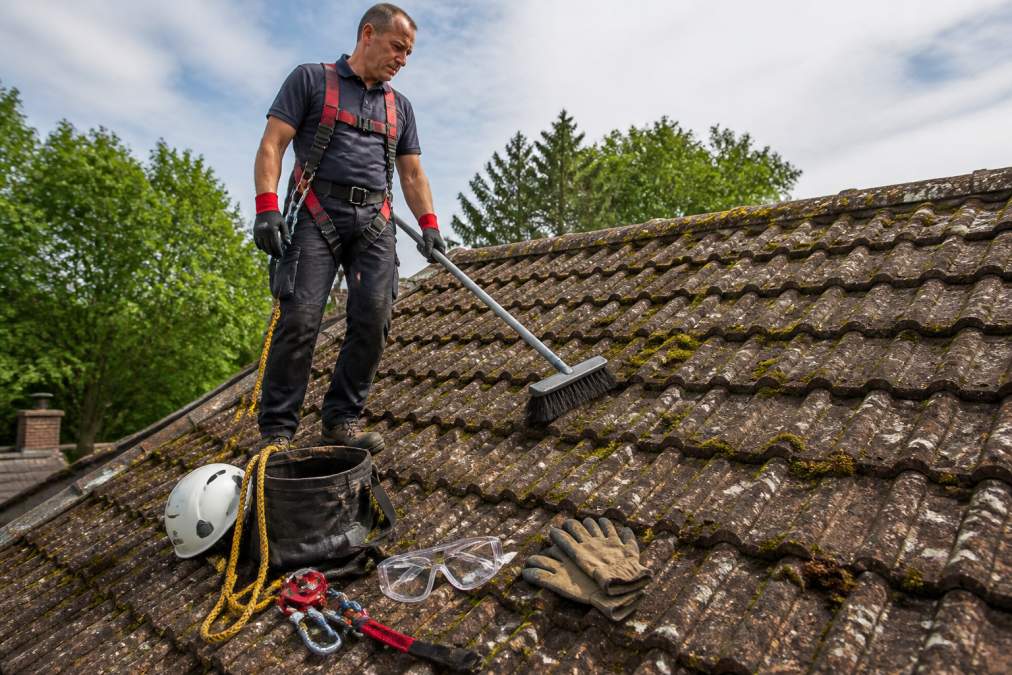
Roof work is the most dangerous part of this job, so safety comes before cleaning. Falls from height cause serious injury, and wet tiles are far more slippery than they look. It is crucial to follow safe working at height guidelines to prevent accidents.
Protective Equipment and Working at Height
Wear non-slip shoes with good tread, and use a safety harness anchored to a rated point whenever you’re working on a pitched roof. For anything steeper than a gentle pitch, or for two-storey homes, scaffolding or a properly secured ladder is the safer option. Never work on a wet or windy day.
Tools You Will Need
- A soft-bristle brush or plastic scraper
- A garden sprayer for applying cleaning solution
- A hose with a low-pressure nozzle
- Safety harness, non-slip footwear, and gloves
- Gutter protection or a tarp to catch debris
How to Clean Roof Tiles Without Pressure Washing
The best way to clean roof tiles without pressure washing is soft washing: applying a low-pressure cleaning solution that kills moss at the root, then letting rain and time rinse it away. High pressure is the wrong tool here; it forces water into the tile’s pores and strips the protective surface layer, leaving tiles more porous and more likely to crack.
Soft Washing vs Pressure Washing
A pressure washer delivers a concentrated jet that can exceed the compressive strength of aged terracotta and cement tile faces. Soft washing relies on a low-pressure application of a cleaning solution, so the moss dies and detaches naturally rather than being blasted off. The trade-off is time: soft washing takes longer to show results because you are relying on chemistry and dwell time rather than force.
| Method | Pressure Level | Effect on Tiles | Best For |
|---|---|---|---|
| Soft washing | Low (mains pressure or pump sprayer) | Gentle, preserves surface | Most tiled roofs |
| Pressure washing | High | Can crack tiles, strip surface, force water under laps | Concrete paths, not roofs |
| Manual scrubbing | None | Safe but slow | Small patches, fragile tiles |
Tile Material Compatibility: What Each Roof Type Needs
Not all tiles respond the same way to cleaning. Treating every roof as if it were concrete is one of the most common causes of avoidable damage.
Terracotta tiles. These are fired clay and become more porous as the glaze weathers. They are brittle under foot and crack easily if walked on incorrectly, so use roof boards or crawl boards to spread your weight. Use a soft-bristle brush only, never a wire brush or scraper, which will scratch the surface and give moss a better grip next season. A pH-neutral or mildly alkaline soft-wash solution is safest; strong acids can etch the clay.
Concrete tiles. Heavier and generally more strong than terracotta, but the surface is porous and often coated with a colour finish that can be stripped by harsh chemicals or high pressure. Soft washing is still the right method. If the tiles are sealed, check the sealer’s compatibility with your chosen cleaner before applying.
Slate tiles. Natural slate is dense and less porous, so moss tends to sit on the surface rather than root in. The risk with slate is mechanical: it is brittle and flakes along its cleavage planes, so avoid walking on it and never use a pressure washer. A soft brush and a low-strength solution are usually enough.
Cement and fibre-cement tiles. Older fibre-cement sheeting may contain asbestos, particularly in homes built or renovated before the mid-1980s. Do not brush, scrape, or pressure wash these until you have confirmed the material. If in doubt, treat it as containing asbestos and engage a licensed removal professional.
Never blast moss off with a high-pressure washer. The force cracks tiles and strips their surface, which creates the perfect damp environment for moss to return even faster.
If you are unsure what your tiles are made of, check under a broken or spare tile at the roof edge, or ask a roofing supplier to identify a sample before you start.
Step-by-Step Moss Removal Process
Follow these steps in order, and work from the ridge down so you’re never scrubbing loosened debris back over clean tiles.
- Clear gutters first. Remove leaves and moss build-up so runoff has somewhere to go.
- Set up your safety gear. Harness, non-slip shoes, and a stable ladder or scaffolding.
- Brush off loose moss. Use a soft-bristle brush, working gently with the tile slope.
- Apply your cleaning solution. Spray low-pressure across the affected areas.
- Let it dwell. Give the solution time to kill the moss at the root.
- Rinse with low pressure. Wash residue toward the gutters, not under the tiles.
- Check and repeat. Treat stubborn patches after a few weeks.
Never blast moss off with a high-pressure washer. The force cracks tiles and strips their surface, which creates the perfect damp environment for moss to return even faster.
Best Eco Friendly Roof Moss Killer Options
The best eco friendly roof moss killer is a biodegradable solution that kills moss without harming your garden or local waterways. Look for products labelled biodegradable and safe for use around plants. Common options include oxygen-based cleaners, which break down naturally, and simple homemade mixes.
Whatever you choose, apply it on a dry, calm day and keep runoff away from garden beds and stormwater drains where possible.
Apply your moss treatment just before a dry spell, not before rain. Rain washes the solution off before it can work, wasting both product and effort.
Preventing Moss Growth on Roof Tiles Long-Term
Preventing moss growth on roof tiles comes down to keeping the roof dry, clear, and well-maintained. Once you’ve removed existing moss, a little routine care stops it returning.
Post-Cleaning Maintenance Schedule
| Task | Frequency | Purpose |
|---|---|---|
| Inspect roof and gutters | Twice a year | Catch early growth |
| Clear gutters and debris | Every 3-6 months | Maintain water flow |
| Apply anti-moss treatment | Annually | Prevent regrowth |
| Trim overhanging branches | As needed | Reduce shade and damp |
Keeping gutters clear is the single most effective habit. Blocked gutters hold moisture at the roof edge, which is exactly where moss likes to start.
DIY vs Professional Moss Removal: Cost and Safety
DIY moss removal suits single-storey homes with light growth and an accessible, low-pitch roof. If your roof is steep, two storeys or higher, or heavily covered, the risk and effort usually outweigh the savings. The decision is really a trade-off between three things: your out-of-pocket cost, your time, and your exposure to fall risk.
What DIY Actually Costs
Most homeowners underestimate the equipment side of DIY. A realistic setup for a single-storey, low-pitch roof includes:
- Safety harness and anchor point (or roof anchor kit), a one-off purchase you may never use again
- Non-slip footwear and gloves
- Soft-bristle brush with an extension handle
- Garden pump sprayer or low-pressure applicator
- Moss treatment concentrate (biodegradable options are widely available)
- Gutter scoop and debris bags
If you already own a ladder, hose, and basic tools, the consumables are modest. If you need to buy or hire a harness, anchor, scaffolding, or an extension pole system, the equipment cost can approach or exceed what a professional would charge for a small roof. Hire rates for scaffolding and harness kits are usually quoted per week, so factor in how long the job will realistically take, including a return visit to re-treat stubborn patches.
What Professional Removal Buys You
A professional service bundles safe working-at-height practices, insurance, proper soft-wash equipment, and a result you don’t have to redo. The main variables that move a quote are:
- Roof size and pitch, steeper and larger roofs need more access equipment and time
- Extent of growth, light surface moss is a single visit; heavy growth with gutter blockages may need two
- Access, single-storey with clear access is the cheapest scenario; double-storey, tiled courtyards, or steep pitches add cost
- Gutter clearing, often quoted separately, and worth bundling so debris doesn’t just end up back in the gutters
- Tile type, fragile terracotta and slate require more care and slower work than concrete
Because pricing varies so much by property, a fixed figure is misleading. Ask for a quote based on an on-site or photo assessment, and confirm whether the price includes gutter clearing, re-treatment of stubborn patches, and disposal of debris.
A Simple Decision Framework
| Situation | Better option |
|---|---|
| Single-storey, low pitch, light moss, you own a ladder and harness | DIY |
| Single-storey but you’d need to hire scaffolding or a harness | Get quotes, DIY may not save much |
| Two-storey or steep pitch | Professional |
| Fragile terracotta or slate | Professional, or DIY with extreme care |
| Suspected asbestos cement sheeting | Licensed professional only |
| Heavy growth with blocked gutters | Professional, ideally bundling gutter clearing |
The cheapest option is not always DIY. Once you add harness hire, scaffolding, treatment, and your own time, the gap between DIY and a professional quote often narrows to the point where the safety and warranty benefits decide it.
Jet Wash Cleaning provides professional exterior cleaning services for residential, commercial, and industrial properties. Our expert team utilizes advanced techniques, including water-fed pole systems and eco-friendly methods, to deliver sparkling results for windows, roofs, gutters, and more. We are dedicated to maintaining your property’s visual appeal and structural integrity with safe, cost-effective, and reliable cleaning solutions. Experience the difference of a pristine property with our guaranteed, high-quality service.
Frequently Asked Questions
How do I remove moss from roof tiles without damaging them?
Use a soft-bristle brush or plastic scraper to gently lift moss away from the tile surface. Avoid metal tools that can scratch glazing. For stubborn patches, apply an eco-friendly moss killer and let it work for several days before brushing away the dead growth. Never use a high-pressure washer directly on tiles, as it can force water under the tile edges and cause leaks.
Is it okay to scrape moss off the roof?
Light scraping with a soft brush or plastic scraper is fine for removing surface moss. However, aggressive scraping can lift tile edges and damage the protective glaze. Work gently at a shallow angle and avoid digging into the tile surface. If moss roots have penetrated deeply, a chemical treatment may be safer than scraping.
What kills moss on tile roofs?
Eco-friendly options include potassium salts of fatty acids, vinegar-based sprays, and commercial biodegradable moss killers. These break down the moss without harming surrounding plants when used correctly. Apply during dry weather and avoid runoff into gutters or garden beds. Always follow the product label for dilution and safety.
Does moss damage roof tiles over time?
Yes. Moss holds moisture against the tile surface, which can lead to spalling, cracking, and porosity issues, especially on terracotta and concrete tiles. Over time, this moisture retention can cause tiles to deteriorate and allow water ingress. Regular removal and preventative maintenance protect both the tiles and the roof structure.
Moss left untreated slowly damages your tiles and blocks your gutters, and the longer it sits, the harder it is to remove. Jet Wash Cleaning offers professional roof moss removal, comprehensive gutter clearing, and eco-friendly cleaning methods across residential, commercial, and industrial properties, with a guaranteed response within 5 minutes. Get a free quote from Jet Wash Cleaning and protect your roof before the damage spreads.